
We spend about a third of our lives on it, yet the mattress is the one thing in the bedroom that almost never gets cleaned. Sweat, dead skin, dust and the odd spilled drink all soak in over the years, and you cannot exactly put it in the wash. The good news is that learning how to clean a mattress is easier than you would think, and you can do a proper job with things you already have at home.

Why a mattress needs cleaning at all
Every night your body sheds skin, sweats and sometimes leaks the odd spill. All of that works its way into the surface of the mattress, where it feeds dust mites and, over time, causes stains and a stale smell. For anyone with allergies or asthma, a dusty mattress can make symptoms worse, especially overnight. A clean mattress simply feels fresher, smells better and lasts longer.
What you need
- a vacuum with an upholstery attachment
- bicarbonate of soda
- washing-up liquid or an enzyme cleaner
- a few clean cloths
- a spray bottle of cold water
That is it. No special machine, no expensive products. The trick is in the method, not the kit.
How to clean a mattress step by step
Set aside a morning when you can strip the bed and leave the mattress to dry. Open a window first, because airflow does half the work.
1. Strip and wash the bedding
Take everything off, including the mattress protector, and get it in the wash on the hottest setting the labels allow. Hot washing is what kills dust mites.
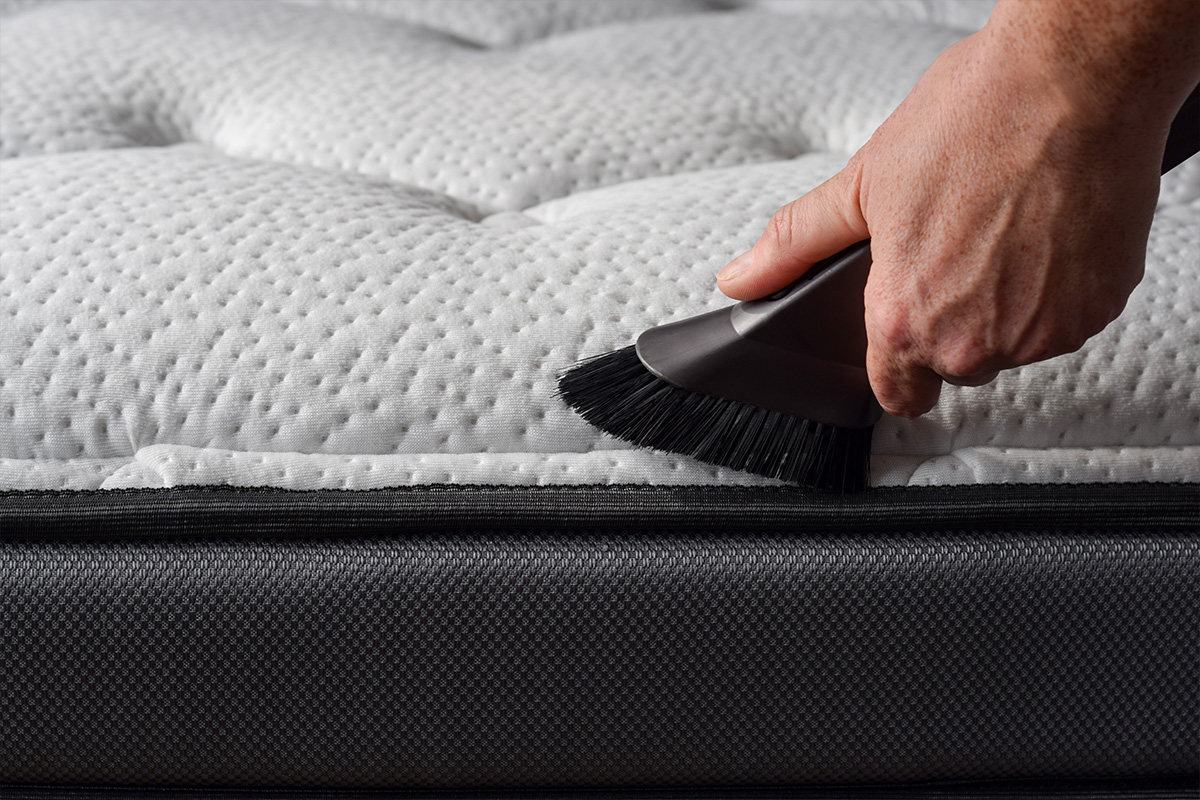
2. Vacuum the whole surface
Use the upholstery attachment and go over the top, the sides and into the seams and buttons, where dust collects most. Take your time here, because this step lifts out the bulk of the dust and skin before you add any moisture.
3. Deodorise with bicarbonate of soda
Sprinkle a generous layer of bicarbonate of soda over the whole mattress. It draws out moisture and absorbs smells. Leave it for at least an hour, and ideally a few hours, then vacuum it all off. This single step makes the biggest difference to how a mattress smells.
4. Spot clean any stains
For marks, mix a little washing-up liquid with cold water, dab it onto a cloth and work from the outside of the stain inwards. Do not soak the mattress, because it takes a long time to dry inside and damp is what causes mould. Blot with a clean damp cloth, then a dry one.
5. Let it dry fully
Leave the mattress to air before you make the bed. A fan or an open window speeds this up. Putting bedding back on a damp mattress is the one mistake that undoes all your work.
Dealing with common stains
Sweat and yellowing. A paste of bicarbonate of soda and a little water, left on for thirty minutes then wiped off, lifts most sweat marks.
Blood. Always use cold water, never hot, as heat sets the stain. Dab with cold water and a little washing-up liquid.
Urine, from children or pets. An enzyme cleaner works best, because it breaks down the proteins that cause both the stain and the smell. Blot, apply, leave, then blot again.
How often should you clean a mattress?
Vacuum and deodorise every three to six months, and deal with any spills straight away. Rotate the mattress at the same time to keep it wearing evenly. If you suffer with allergies, a monthly vacuum is worth the effort.
How to keep a mattress fresher for longer
- use a washable mattress protector and wash it every few weeks
- air the bed each morning by folding the duvet back before you make it
- let the room breathe, as good ventilation reduces moisture and dust mites
- never make the bed straight after cleaning, until the mattress is fully dry
When to bring in a professional
Deep stains, heavy soiling or a mattress that has never been cleaned can be more than a DIY job. A professional steam clean reaches deeper than surface cleaning and lifts out dirt and allergens from inside the fabric. This is part of what a upholstery steam cleaning service covers, and it often gets booked alongside a full deep cleaning of the home. For anyone moving out, a fresh mattress is one less thing for an inventory check to flag.
Whichever way you go, the principle is the same. Lift the dust first, add as little moisture as possible, and always let it dry.
Mattress cleaning questions
How do I clean a mattress at home?
Strip and hot-wash the bedding, vacuum the whole mattress with an upholstery attachment, sprinkle bicarbonate of soda over it and leave for a few hours, then vacuum again. Spot clean stains with cold water and washing-up liquid, and let it dry fully.
How do I get stains out of a mattress?
Use cold water and a little washing-up liquid, working from the outside of the stain inwards. For sweat marks use a bicarbonate paste, and for urine use an enzyme cleaner. Avoid soaking the mattress, as damp causes mould.
How often should I clean my mattress?
Vacuum and deodorise every three to six months, and clean spills straight away. Rotate the mattress at the same time. If you have allergies, vacuum monthly.
Can I use bicarbonate of soda on a mattress?
Yes. A generous layer left on for a few hours draws out moisture and absorbs odours, then vacuums straight off. It is the single most effective step for a fresher-smelling mattress.
How do I remove the smell from a mattress?
Sprinkle bicarbonate of soda over the whole surface, leave it for several hours to absorb odours, then vacuum it all off. Good airflow from an open window or a fan helps the smell clear.


