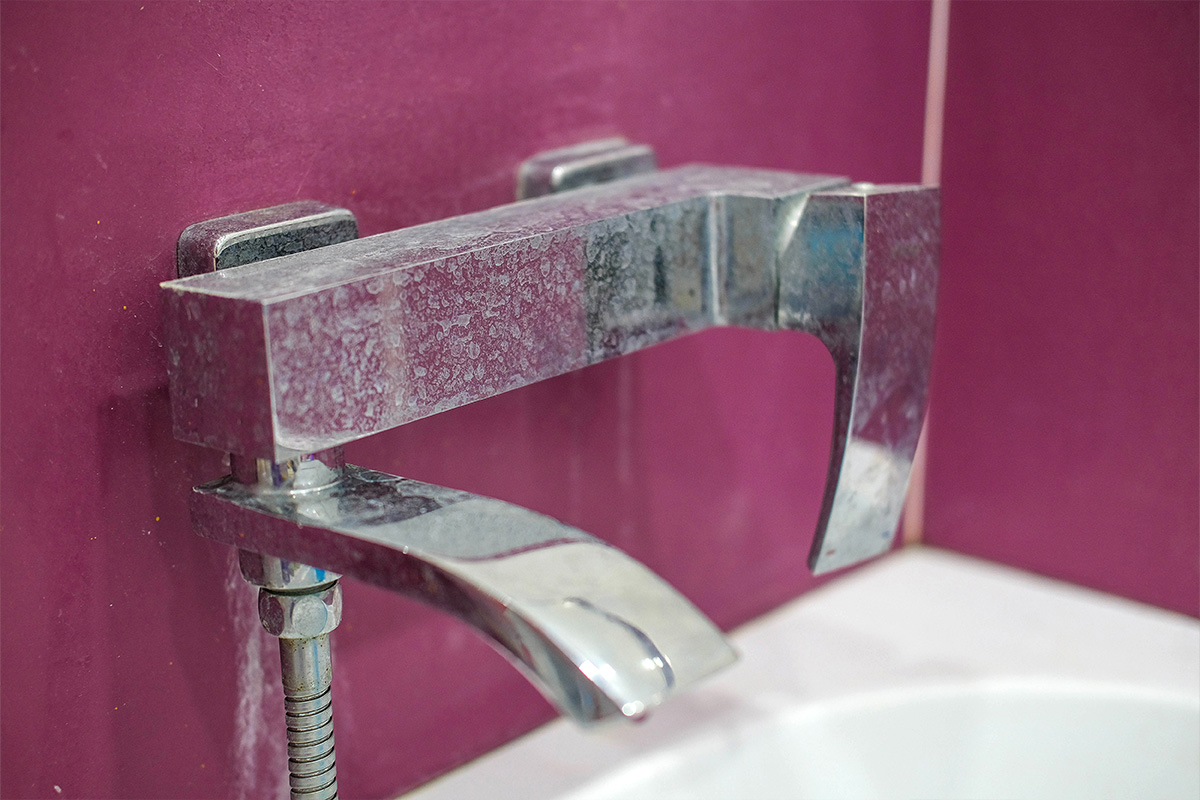
If you live in London, you already know the problem. A white, crusty film creeps over your taps, a cloudy haze settles on the shower screen, and the kettle fills up with chalky bits that float in your tea. That is limescale, and London has some of the hardest water in the country, so it builds up fast. The good news is that learning how to remove limescale is simple, cheap and does not need harsh chemicals.

What causes limescale in the first place
Hard water carries dissolved minerals, mainly calcium and magnesium. Every time that water dries or gets heated, it leaves those minerals behind as a hard, chalky deposit. That is why it shows up worst where water sits or evaporates: taps, shower heads, kettles, the base of the toilet and around the edges of sinks and baths.
Left alone, it does more than look unsightly. Scale clogs shower heads so the spray goes weak and spits sideways, it makes kettles and dishwashers work harder, and it can shorten the life of appliances. So it is worth staying on top of.
What you need
You almost certainly have everything already:
- white vinegar or lemon juice
- bicarbonate of soda
- a few cloths
- an old toothbrush
- a sandwich bag and an elastic band
White vinegar is the workhorse here. It is a mild acid, and limescale dissolves in acid, which is why it shifts deposits that scrubbing alone never will.
How to remove limescale from taps
This is where most people start, because taps are on show. Soak a cloth in white vinegar, wrap it tightly around the tap and leave it for about an hour. For the spout and the awkward grooves, dip an old toothbrush in vinegar and work it in. Wipe clean, rinse with water and buff dry with a soft cloth so no new water spots form.
For really stubborn build-up around the base, make a paste of bicarbonate of soda and a little water, leave it on for a few minutes, then wipe away.
How to remove limescale from a shower head
A blocked shower head is one of the most satisfying things to fix. Fill a sandwich bag with white vinegar, slip it over the shower head so the holes are submerged, and hold it in place with an elastic band. Leave it for an hour, or overnight if the scale is heavy, then remove the bag and run the shower hot for a minute. The flow usually comes back straight away. If a few holes are still blocked, poke them through with the toothbrush.
How to remove limescale from a kettle
Fill the kettle about halfway with equal parts water and white vinegar, bring it to the boil, then switch it off and leave it to stand for twenty minutes. Pour it away, then boil with fresh water once or twice to clear any taste before you use it again. Lemon juice works just as well if you prefer the smell.
Shower screens, tiles and the bathroom
Spray white vinegar over the glass and tiles, leave it for ten minutes and wipe down, then rinse and squeegee dry. The toilet is easy too: pour a cup of vinegar around the bowl, leave it overnight and brush in the morning. For the hard ring that often sits at the waterline, a paste of bicarbonate of soda does the trick.
How to stop limescale coming back
You will not stop it completely in a hard water area, but you can slow it right down:
- dry taps, screens and tiles after use, so water never gets the chance to dry on them
- keep a spray bottle of diluted vinegar in the bathroom for a quick weekly wipe
- descale the kettle every few weeks rather than waiting for a thick layer
- run a cup of vinegar through an empty dishwasher or washing machine now and then
A little and often beats a big descaling session every time.
One thing to avoid
Do not use vinegar or any acid on natural stone such as marble or granite worktops, or on gold and some coated taps, because the acid can dull or damage the surface. For those, use a product made for the material, or plain warm soapy water and a soft cloth.
When a deep clean makes more sense
Sometimes the scale has been building for years, especially in a rented flat or a bathroom that has been neglected. That is when it is worth bringing in a professional. A full deep cleaning tackles the scale on every tap, screen and tile in one go, and it is one of the first things an inventory clerk checks during an end of tenancy cleaning in London, where limescale around taps and shower heads is a common reason for a deposit deduction.
However you handle it, the method stays the same. Give the acid time to work, and you will barely have to scrub.
Limescale questions
How do I remove limescale naturally?
White vinegar and lemon juice both dissolve limescale without harsh chemicals. Soak the affected area, leave the acid to work for an hour or overnight, then wipe clean and rinse. Bicarbonate of soda helps on stubborn patches.
How do I remove limescale from taps?
Wrap a cloth soaked in white vinegar around the tap and leave it for about an hour. Use a vinegar-dipped toothbrush on the grooves, then rinse and buff dry. A bicarbonate paste helps with heavy build-up around the base.
How do I descale a kettle?
Fill it halfway with equal parts water and white vinegar, boil, then leave to stand for twenty minutes. Pour it away and boil with fresh water once or twice to clear the taste before using it again.
Can I use vinegar on all surfaces?
No. Avoid vinegar and other acids on natural stone such as marble and granite, and on gold or coated taps, because the acid can damage the finish. Use a product made for the material instead.
How often should I descale in a hard water area?
In a hard water area like London, wipe taps and screens dry after use and do a quick vinegar wipe weekly. Descale the kettle every few weeks to stop a thick layer forming.